Before Napoleon Bonaparte took the throne as leader of the French Republic in 1804, he led an expedition to seize control over the strategic Middle East region. In June 1799, however, the Battle of Acre would provide a barricade to this mission. Napoleon’s forces attacked the city of Acre twelve times but had to retreat thirteen times. This clash took the lives of 2,300 men, and another 2,200 were wounded or ill. In a brief bulletin to his troops, Napoleon would elegantly shape his words to turn the defeat into a virtual triumph:
“Soldiers: You have traversed the desert which separates Asia from Africa, with the rapidity of an Arab force. The army, which was on its march to invade Egypt, is destroyed. You have taken its general, its field-artillery, camels, and baggage. You have captured all the fortified posts, which secure the wells of the desert. (…)”
The Modern Leader’s Strategy
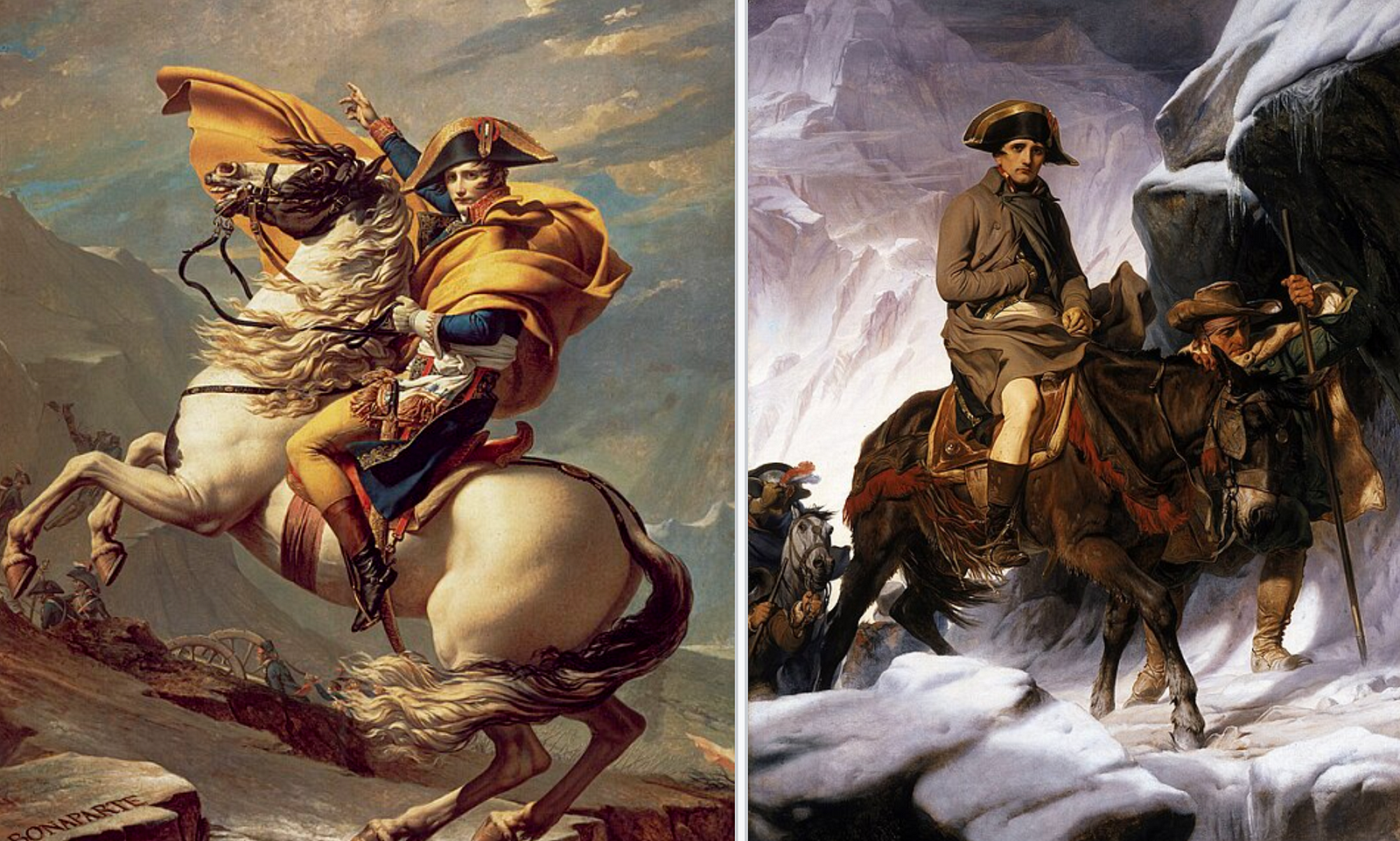
Napoleon was the first modern leader who systematically used the newspapers and press as a political bazooka to amplify the grandeur and swiftness of his military victories. He even manipulated citizens’ beliefs through art and theater to win their sympathy.
The French leader could turn the bad into the good in one sweeping motion. He knew nothing was more powerful to get people on his side than to massage the truth to his favor. This strategy did not die with Napoleon.
Present-Day Napoleonic Misinformation
Nowadays, similar to Napoleon’s creative manipulation of truths, everyone who uses social media is in a way their own Napoleonic propaganda machine, often without realizing it.
In media, and social media in particular, truth is also often vividly painted as a clear and easily understandable verdict. A matter of black or white. Left or right. Wrong or right.
As if truth can be reduced to a catchy headline.
In reality, truth is not black or white. It is a complex combination of events and facts that makes the final truth much more nuanced. It is a lot less entertaining than it is portrayed by our Napoleonic ministers of propaganda: your national television broadcast, your social media heroes, or whoever they may be.
These modern-day ministers of propaganda are those who exploit our prejudices and invigorate us to hold firm black-white opinions on complicated matters. They touch our emotions to get our attention.
This is no rocket science.
The chilling reality is that media corporations and firms better understand how our brains work than we do. They make use of this knowledge. And so, the ordinary man risks becoming the victim of his own brain. What could be more discomforting than the fact that a group of people exploit our attention at the cost of truth and ethics?
Lies Outcompete Truth on Cruise Control
Back in the Napoleonic age, in the beginning of the 19th century, few information channels were available to people. Spreading flawed truths was a child’s play. On the other side of history, contemporary information dissemination is so extensive and fragmented that everybody can pretend to know the truth and spread his word.
Oversimplified facts, captivating statements, and outright lies … they all have a soil more fertile than ever to grow and spread.
Charles Spurgeon, a prominent British preacher in the 19th century, beautifully and poetically stated this competition between truth and lies in one of his sermons:
“If you want truth to go round the world you must hire an express train to pull it; but if you want a lie to go round the world, it will fly; it is as light as a feather, and a breath will carry it. It is well said in the old Proverb, ‘A lie will go round the world while truth is pulling its boots on.’ ”
Intellectual independence as antidote
It is our own personal responsibility to disregard the clickbait headlines and go on our own quest for truth. To curate sources, seek other perspectives, distill them, and independently form our beliefs instead of naively trusting what is presented to us as truth.
Compared to the Napoleonic epoch, we have more control and autonomy to decide who our ministers of propaganda are.
We can have a coup of our propaganda parliament and form one ourselves, an intellectually independent one.
Napoleon became his own victim
People always thought that Napoleon was a small man and therefore called him “le petit corporal,” when in fact he was not called that because of his height. He held this nickname because of the affection and admiration soldiers had for their leader.
Ironically, the father of modern propaganda became a victim of misinformation himself.
Historical sources:
https://www.shapell.org/historical-perspectives/articles/napoleon-the-original-fake-news
https://en.wikipedia.org/wiki/Napoleonic_propaganda
https://www.napoleon.org/en/history-of-the-two-empires/articles/was-napoleon-small/
